
A flowering bed along the driveway
In a sunny spot, white yarrow, purple salvia and blue fescue can turn a strip of tired grass into a border with colour and texture. We leave room for each plant to fill out without spilling onto the driveway.
Low-water gardens on Vancouver Island
Trade the lawn you rarely use for a garden that needs less summer watering once established. We design and install flowering beds, gravel paths and dry creek beds for Vancouver Island homes.
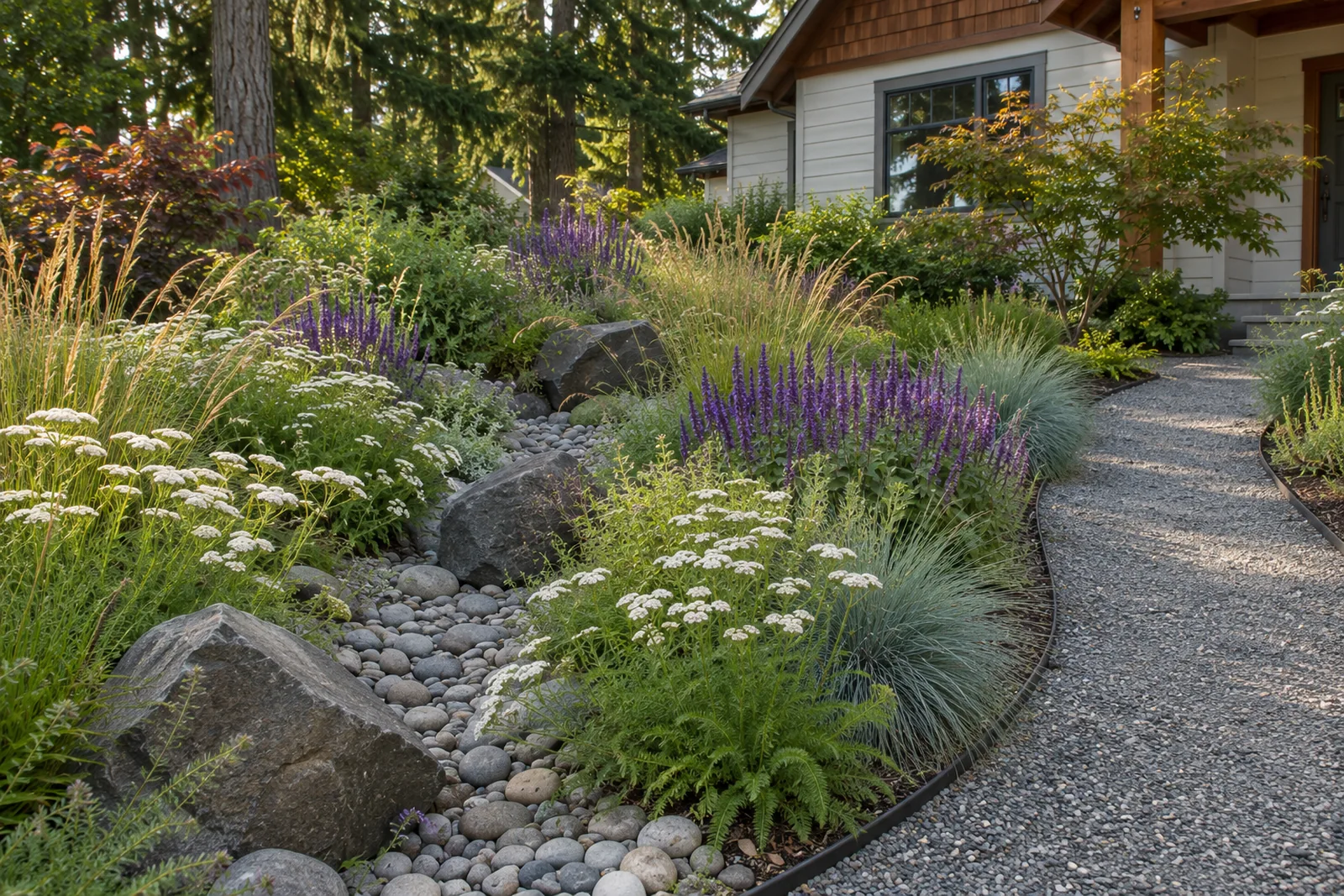
In a sunny spot, white yarrow, purple salvia and blue fescue can turn a strip of tired grass into a border with colour and texture. We leave room for each plant to fill out without spilling onto the driveway.
Rounded river rock, a few larger basalt boulders and planting along the banks give a dry creek its shape. If it also needs to carry runoff, we check the slope and where the water can go.
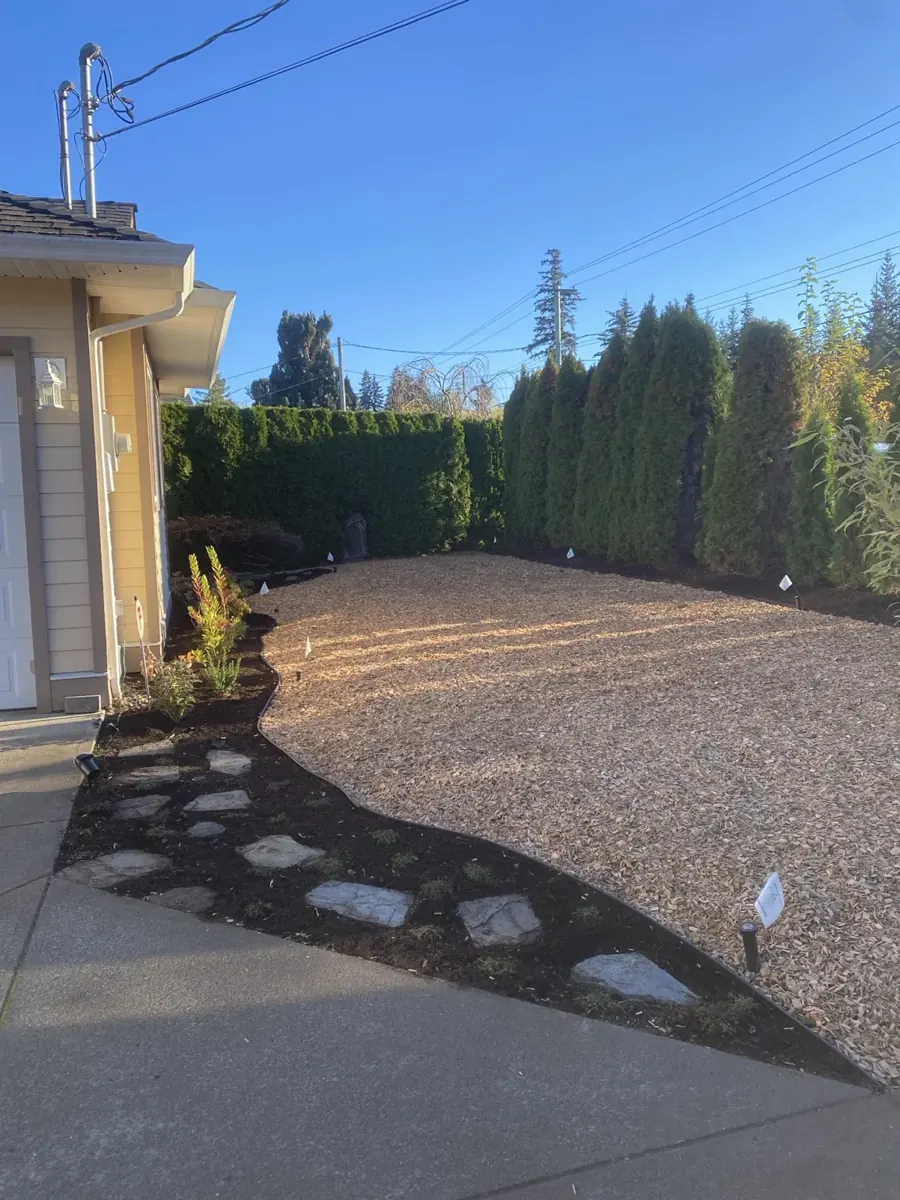
Compacted gravel gives you a firm route for bins and wheelbarrows. A defined edge keeps gravel out of the planting beds. For an occasional shortcut between beds, stepping stones keep foot traffic off the soil.
Tell us your town, roughly how large the area is, and what you’d like to keep. We’ll reply by email to discuss your ideas and arrange a site visit if needed.
You can share yard photos when we follow up.
Call 778-585-7521Yes. Show us the trees and shrubs you love, where the kids play or where the dog likes to run. We can design around those areas and convert the grass you rarely use.
New plants need regular watering while their roots establish. After that, watering depends on the plants, soil and weather. We can group plants with similar needs on a drip line and adjust existing lawn sprinklers to suit the new layout.
Plan on occasional weeding, pruning and topping up mulch. Gravel paths need the odd rake, and drip lines should be checked during the watering season. Tell us which jobs you want to spend less time on so we can account for them in the design.
The area, sod removal, soil preparation and access for equipment shape the quote. Plant sizes, boulders, path materials and irrigation changes also affect the price. Rough dimensions and your priorities give us a place to start.
Yes. A sunny strip along the driveway or a single front bed can be the first phase. We look at future paths, drainage and irrigation connections before setting the edges for that first area.
Our crew is based in Campbell River. Select your community for local service details.