
Head-to-head coverage
Sprinklers are spaced so one head reaches the next, reducing dry areas that appear when coverage is based only on maximum throw.
Even coverage for healthy lawns
Purpose-designed sprinkler zones for even lawn coverage without routinely watering patios, walls or garden beds.
The scope
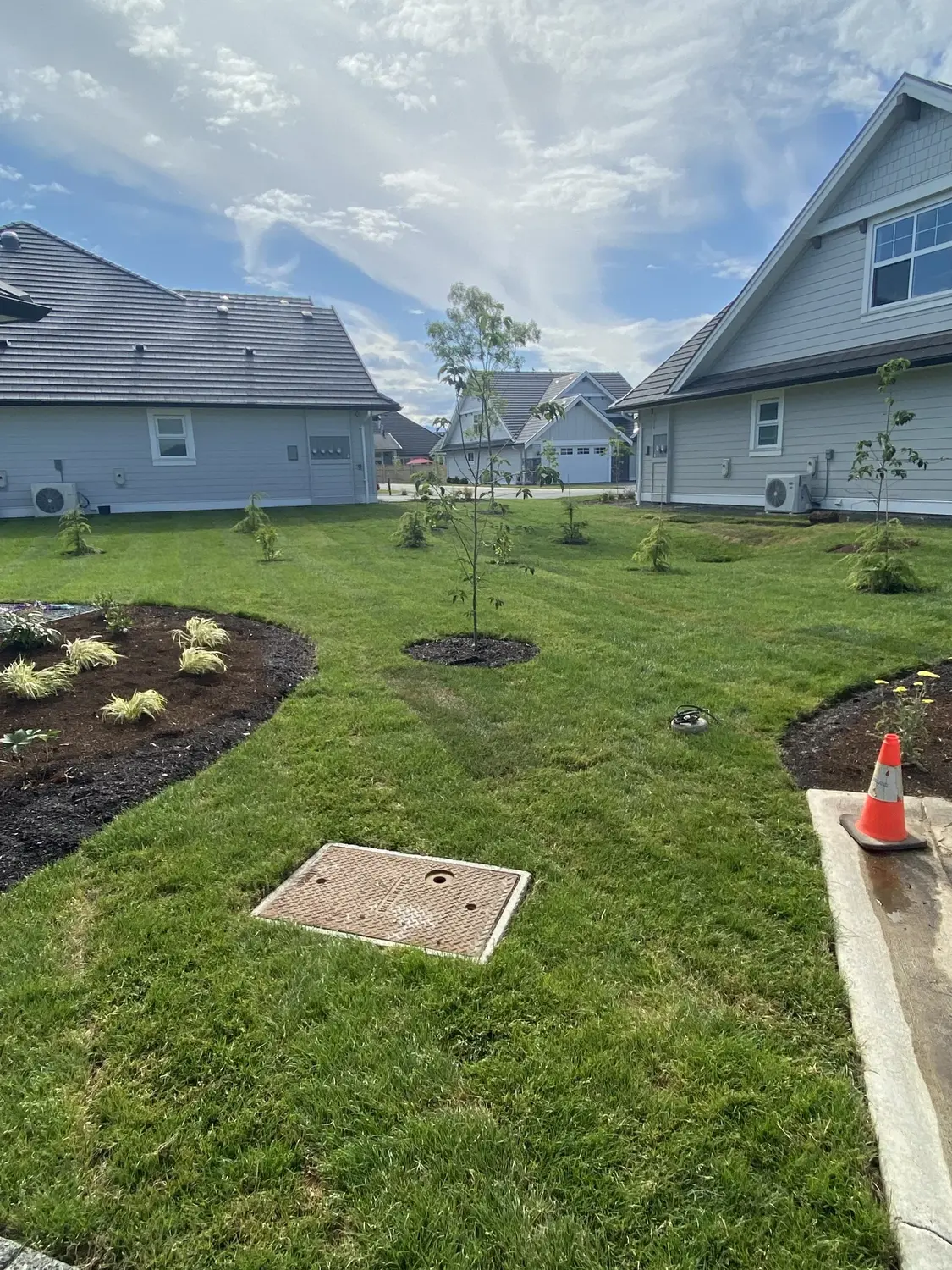
A lawn sprinkler system should match the available flow, lawn shape, exposure and soil—not rely on a few heads stretched beyond their range. We lay out practical zones and select spray or rotor coverage to apply water evenly across the lawn.
Planning the work
Even lawn coverage depends on matched head spacing, nozzle selection, available flow and zones that respect the actual lawn shape rather than stretching a few sprinklers beyond their range.
Sprinklers are spaced so one head reaches the next, reducing dry areas that appear when coverage is based only on maximum throw.
Corners, narrow strips, curves, slopes, wind exposure and obstacles influence the right mix of sprays, rotors and nozzles.
Heads operating together should apply water at compatible rates so one part of the zone is not soaked while another remains dry.
Layouts are planned to limit routine watering of buildings, fences, patios, roads and garden areas with different needs.
The RiverCity difference
Matched precipitation, sensible head spacing and properly separated zones help the lawn receive consistent water while reducing overspray and dry areas.
Our process
We measure lawn shapes, obstacles, slopes, exposure and available pressure and flow.
Pipe, valves and sprinkler heads are installed around practical hydrozones and operating flow.
Heads are aligned and adjusted, zones are tested and the controller is programmed.
Preparing an accurate quote
Good early information reduces assumptions and helps identify the right site visit, measurements and construction approach for your lawn sprinklers project.
Start your project requestCommon questions
Yes. Installing irrigation before final soil preparation and sod makes pipe routing cleaner and allows coverage to be tested before the lawn is finished.
Usually they should be separated because lawns and gardens have different application rates and watering needs.
Yes. Head type, spacing and nozzles are selected around the lawn geometry and available water supply.
Vancouver Island service areas
Start a project
Tell us the property location, what you want to build and what the site needs. We’ll review the details and recommend the right next step.