
The short answer
Find the source and confirm the available outlet before choosing a drain. Wet yards can be caused by surface grading, compacted soil, roof water, groundwater or a combination of conditions.
Identify where the water is coming from
Standing water after heavy rain does not automatically mean a French drain is the correct solution. Water may be arriving across the surface, collecting from roof leaders, moving through soil from an uphill property or remaining above a compacted layer.
Observe when the wet area appears, how long it remains and whether it follows a visible low point. Photographs taken during rain can be more useful than looking at the property several dry days later.
- Roof and downspout discharge
- Low areas and reverse grades
- Runoff from uphill surfaces
- Compacted construction soil
- Irrigation leaks or excessive watering
- Seasonal groundwater
Confirm a suitable outlet before installing pipe
A drainage pipe only moves water when it has somewhere appropriate to discharge. The elevation and legality of the outlet must be confirmed before excavation begins.
Water should not simply be transferred onto a neighbour or toward a structure. Depending on the site, the solution may involve surface grading, collection, solid conveyance, infiltration or a combination designed around local requirements.
Use surface grading wherever it can solve the problem
Surface water is often most reliably managed at the surface. Shallow swales, corrected low points and positive grades can reduce the amount of water that needs to enter an underground system.
Finish elevations must also allow enough room for growing soil and sod without trapping water against patios, fences or foundations.
Match the drainage method to the problem
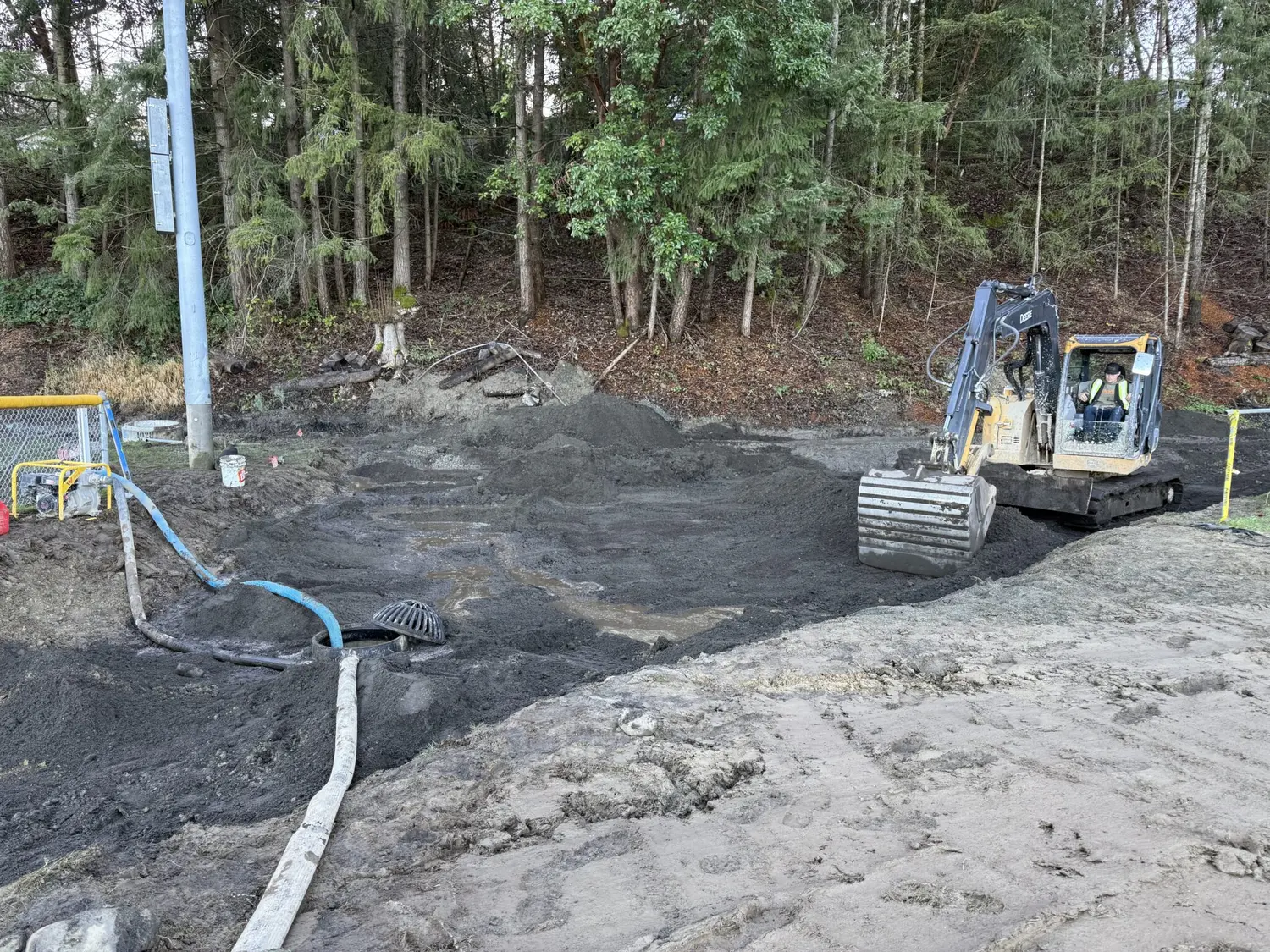
Catch basins collect surface water at defined low points, while solid pipe conveys collected water without intentionally absorbing more along the route. French drains are intended for suitable subsurface conditions and require correct stone, fabric and an outlet.
Combining systems without understanding their purpose can create sediment problems, slow flow or a drain that never addresses the actual source.
Repair the landscape only after the water problem is addressed
New sod or topsoil will not correct a continuing drainage failure. Complete the grading and drainage work first, test the critical elevations and then restore growing soil, irrigation, lawn, gardens or hardscape.
This sequence protects the new finish and makes it easier to correct a problem before the final landscape is installed.